Lower Secondary History, one clear step at a time
Short video lessons and step-by-step exam practice, aligned to the MOE syllabus and designed for every kind of learner. So your child knows what matters, and how to show it in a test.
- Who it's for
- Secondary 1 and 2 students (including IP Year 1 and 2), and Primary 6 students getting ready
- Subject
- History, with Geography and Literature planned next
- Works on
- Phone, tablet or computer, with progress that follows your child between devices
- Cost
- Free during the pilot; after launch, one affordable subscription covers Sec 1 and Sec 2
Content follows the MOE syllabus. IP schools may set their own curriculum, so some topics can differ, but the source-analysis and essay skills apply to both.
How it works
Three steps your child repeats for every topic
- Step 1 · Learn
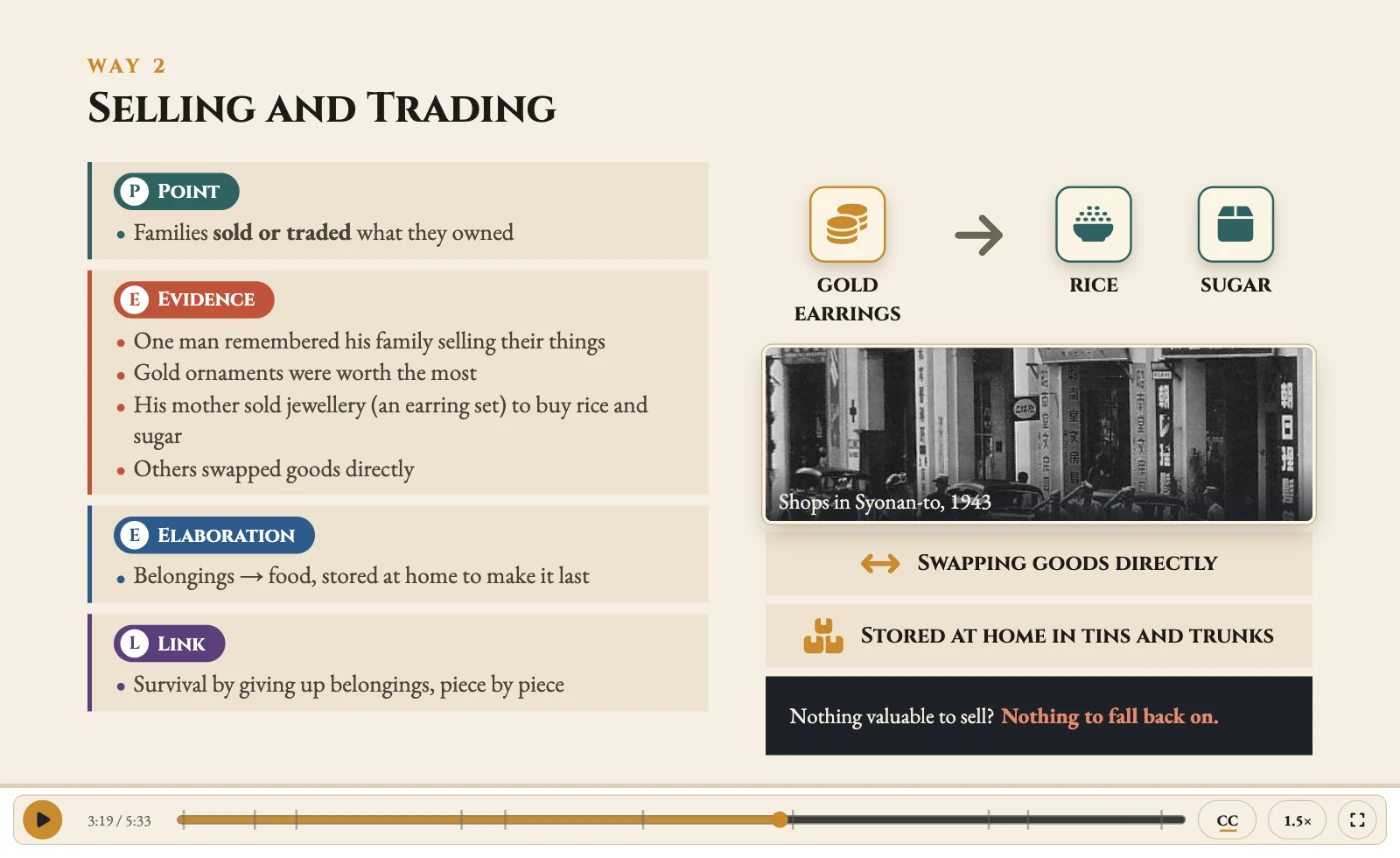
Short videos that make sense of it
Two student guides, Mei and Kai, talk through each topic in a few minutes, like a short podcast with pictures. The key arguments are laid out underneath in PEEL: Point, Evidence, Elaboration, Link, the shape of a good exam answer. Quick checks pause the video so your child answers first. Every lesson is also available as audio, for learning on the bus or away from a desk.
- Step 2 · Practise
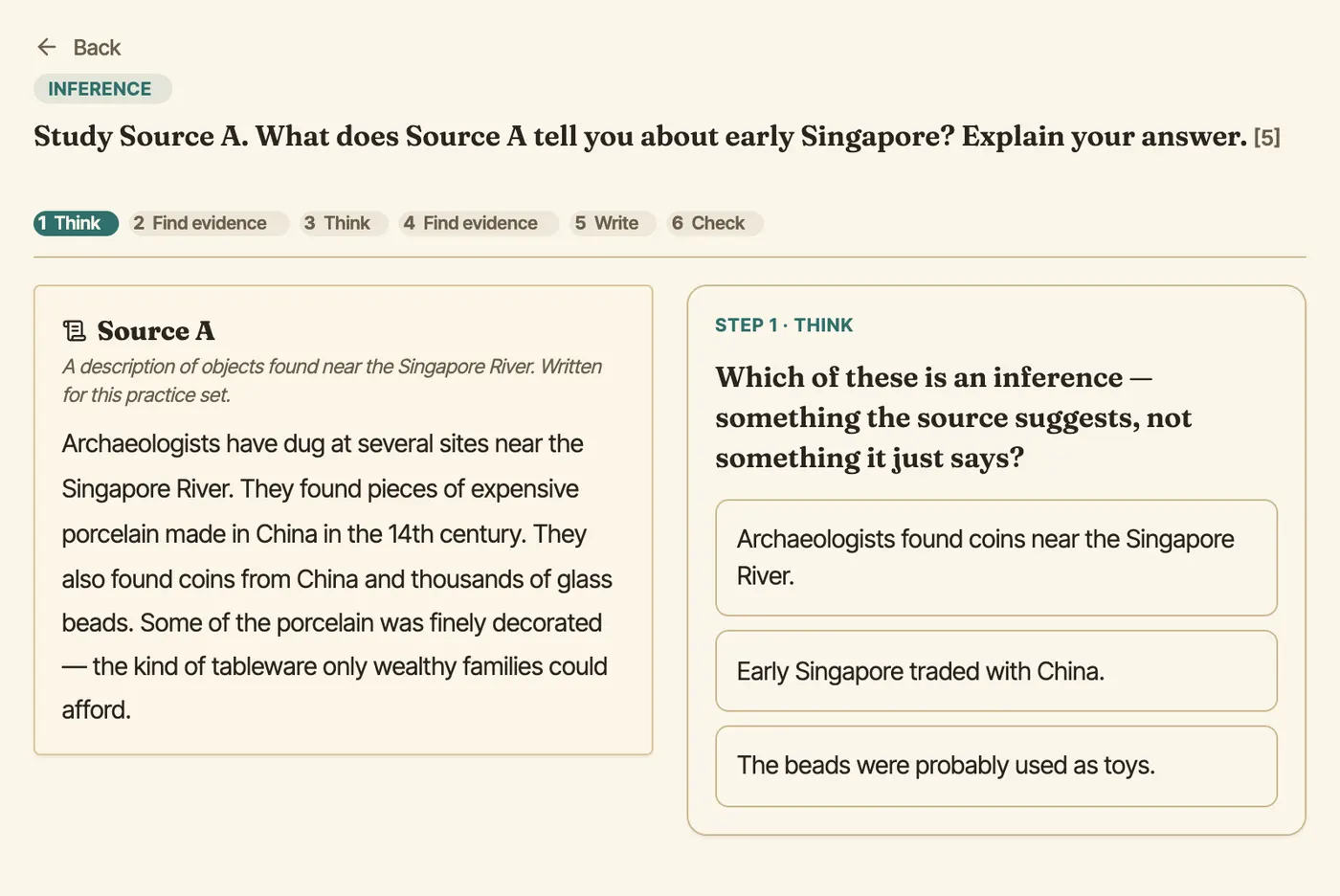
Exam practice, one step at a time
Source-based and structured essay questions, the two question types in school tests, are broken into small steps. Your child sees how answers are marked before they write, and every written answer gets a level, a mark, what went well and a clear next step.
- Step 3 · Keep going
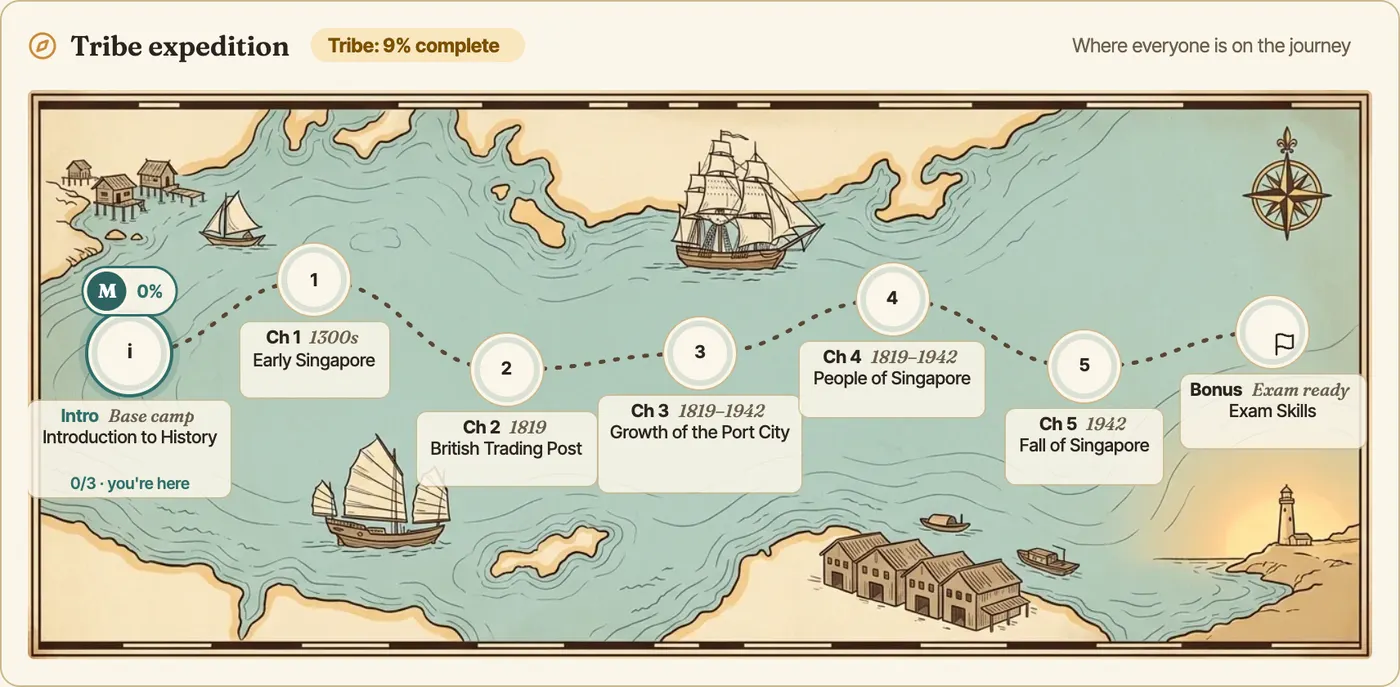
A small study group, not a solo slog
Friends form a small, invite-only tribe of up to 10 and move along the expedition map together, cheering each other on. Children who prefer to work alone can go solo, with Mei and Kai as guides. Study plans and a daily review keep everyone on track for test day.
Design principles in Our Study Tribe
How our eight principles show up
Every Sobena product is built on the same eight design principles. This is how each one appears in Our Study Tribe.
Design for variation from the start
Every lesson can be watched, listened to or read, and practised step by step.
Respect the limits of working memory
Lessons of about five minutes, one idea at a time, with visuals and narration designed to work together.
Accessible by default
Captions, adjustable playback speed, a glossary and an immersive reader with read aloud, line focus and an easy-read font.
Make disciplinary thinking visible
Arguments laid out as Point, Evidence, Elaboration and Link; source questions split into named skills such as inference and comparison; and every question tagged with the historical thinking it practises, such as evidence, cause and consequence, or significance.
Scaffold, then fade
Guided PEEL boxes, sentence starters and step-by-step hints support early answers. After consistently strong answers, students are invited to try without them, ending with full practice papers in the assessed format.
Retrieve and space, don't just re-read
Quick checks pause the video so students answer before the narrators do. A daily review uses spaced repetition, bringing each idea back after 1, 2, 4, 7, 14 and 30 days, and ends with an "explain it in your own words" card.
Feedback that moves learning forward
Students see how answers are marked before they write. Every written answer then returns an indicative level, one strength and one specific next step.
Motivation through autonomy, competence and belonging
Daily goals with a short reflection, progress counted as days studied each week rather than streaks, and small invite-only study tribes with shared challenges and no rankings.
For parents
Why parents trust it
See their week at a glance
A private progress link, shared by your child, shows what they watched and practised, their goals and upcoming tests. No login needed.
Safe and private
No public chat, no strangers and no ads. From your progress link you can see who's in their tribe and switch chat off.
Follows the syllabus
Lessons and practice questions follow the MOE Lower Secondary History syllabus for Secondary 1 and Secondary 2.
Feedback that helps
Answers are marked straight away with a level and what to add next. It's a guide to improve, not a school grade.
Growth over grind
Short sessions, steady progress and encouragement. No cram culture, no rankings and no streaks to keep up.
Shaped by students
A pilot group of Singapore secondary students is testing it now. Their feedback decides what we build next.
Questions families ask
Good questions, straight answers
Something else on your mind? Ask us a question