For parents and students
Support for the step up to secondary school
The move from primary to secondary school is one of the biggest changes in a young person's education. We design tools, grounded in the learning sciences, that help students manage it in a way that suits how they think, and help parents support them without having to become tutors.
Understanding the transition
Why the first years of secondary school feel so hard
Research on school transitions finds that the move into secondary school is a sensitive period. Many students see a dip in motivation and confidence, even when they did well in primary school.
Several new subjects arrive at once. Humanities subjects such as History ask students not only to remember, but to analyse sources and argue in writing, often for the first time.
has limits. When information arrives as long, unstructured pages, students spend their effort organising it rather than understanding it. Capable students can mistake this overload for a lack of ability.
For parents
What the research suggests, and what it means at home
Three well-established findings, and what each one might look like in your family's week.
Overload is not inability
If your child seems stuck, the material may be arriving in pieces too large to hold at once. Help them find the structure: what matters, in what order. Smaller, ordered steps often unlock a topic that felt impossible.
Short and spaced beats long and crammed
Studies comparing study techniques find that testing yourself and spacing practice over several days are far more effective than re-reading or highlighting. Twenty focused minutes, three times a week, usually achieves more than one long session the night before a test.
Choice and progress build motivation
Motivation research shows that young people sustain effort when they feel some control, see their own progress and feel connected to others. Asking “What's your plan for this week?” tends to work better than setting the plan for them.
For students
Study in a way that works for your mind
Everyone's brain works a little differently, and that's normal. These four habits are backed by research and work for almost everyone. Try them one at a time.
Break it down
Before you start, work out the three or four main points of the topic. Learn one piece at a time instead of trying to hold everything at once.Test yourself, don't just re-read
Close the book and try to explain the idea, or answer a practice question. Getting it wrong is part of learning: it shows you exactly what to go back to.Space it out
Come back to a topic a few days later. Short sessions spread over the week help you remember far longer than one long session.Learn with others
Explaining something to a friend is one of the best ways to check you understand it. A small study group can keep you going when a subject feels tough.
If your child learns differently
Designed for every kind of mind
Our tools plan from the start for differences in attention, processing and working memory. Clear structure, short segments, audio alongside text and step-by-step feedback reduce unnecessary load for every student, including those who are neurodivergent, with or without a formal diagnosis.
You can try the same immersive reader on this website. Select Listen at the top of any page to have it read aloud with each word highlighted, or Aa to focus on one line at a time, enlarge the text, add spacing or switch to an easy-read font.
Learning tools can help, but they are not a substitute for professional assessment or support. If you are concerned about your child's learning, a good first step is a conversation with their form teacher, who can connect you with the support available in school.
Further reading
The research behind this page
The findings on this page come from research on school transitions, cognitive load, effective study techniques and motivation. For parents who would like to read further, our Design Principles page explains each principle and lists the studies in full.
Our Study Tribe at home
How it fits into your home
Built to fit around school, CCAs and family time. Free during the pilot, for Lower Secondary and P6 students:
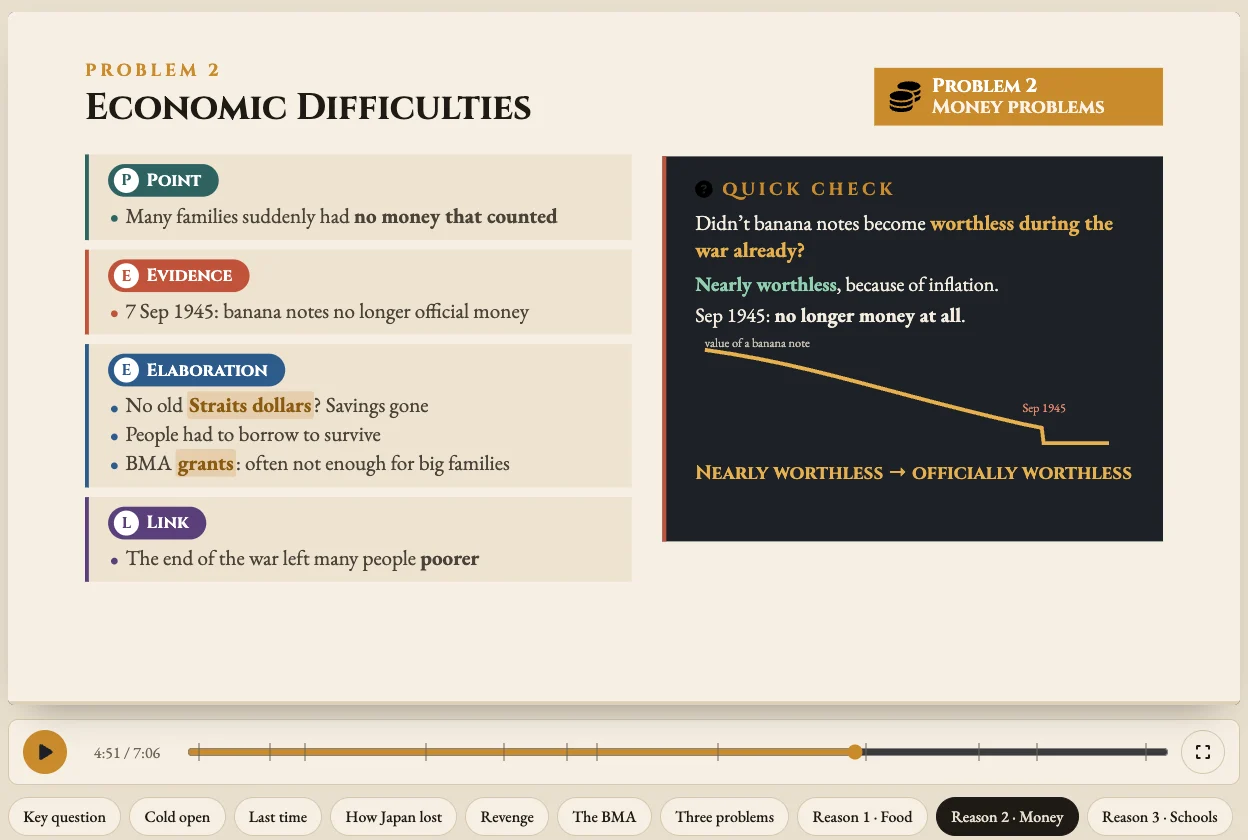
- Short sessions after school. Lessons of a few minutes, one idea each, with quick checks that make your child answer first. Easy to fit around CCAs and dinner.
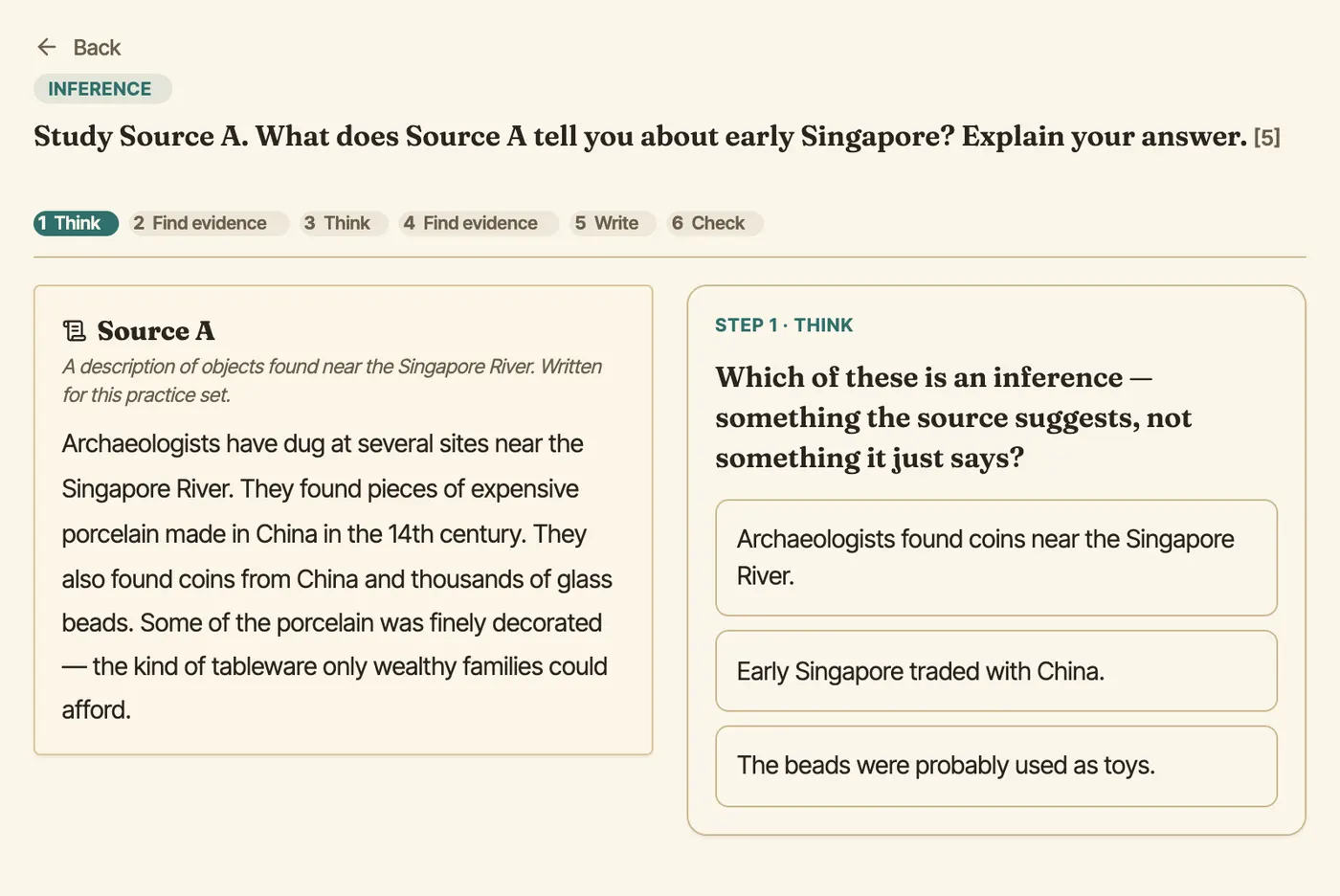
- Homework help, without being the tutor. Source-based and essay questions broken into steps, with feedback on every answer: a level, one strength and one next step.
- Learning on the go. Every lesson is also available as audio, for the bus or time away from a desk.
- Test season. A study plan, a short daily review and practice papers in the real exam format, timed or untimed.
- Staying in the loop. A private progress link, shared by your child, shows what they've done, their goals and upcoming tests. No login needed.
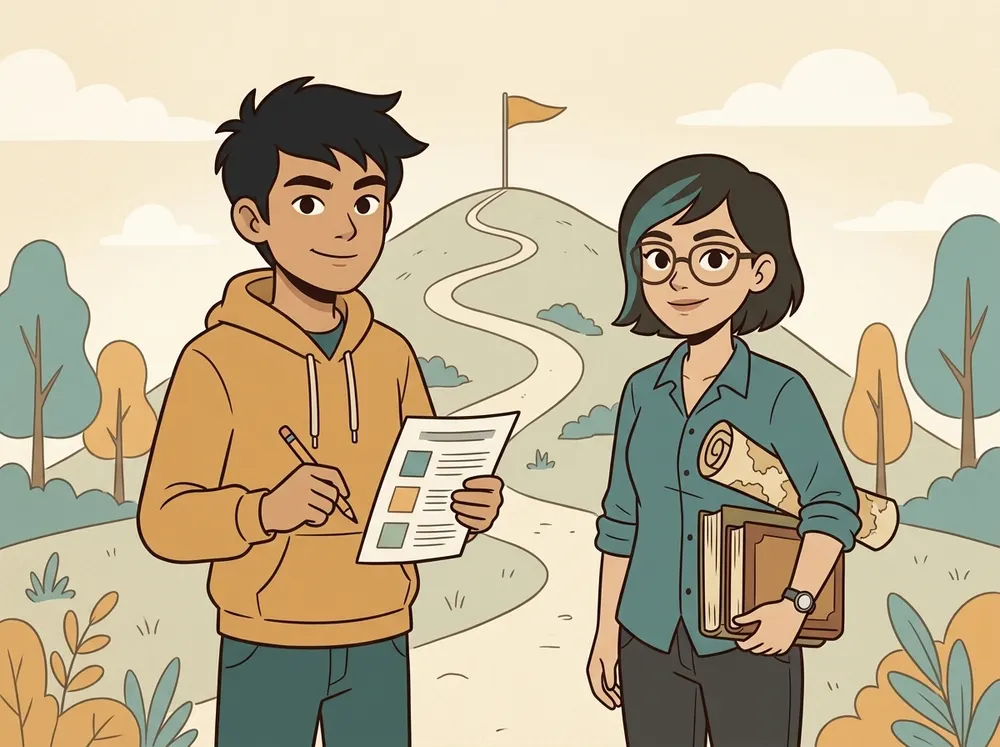
- Studying with friends, safely. Small invite-only tribes, or go solo with Mei and Kai. No rankings, no public chat, and you can switch chat off.
- For every kind of reader. Captions, a glossary and an immersive reader with read aloud and line focus.