For educators
Resources designed for every learner in the room
Every classroom holds a wide range of learners. Our tools are built on Universal Design for Learning and the wider learning sciences, so that more of your students can access the same rigorous content, and more of your time can go to teaching.
Why it matters
Learner variability is the norm, not the exception
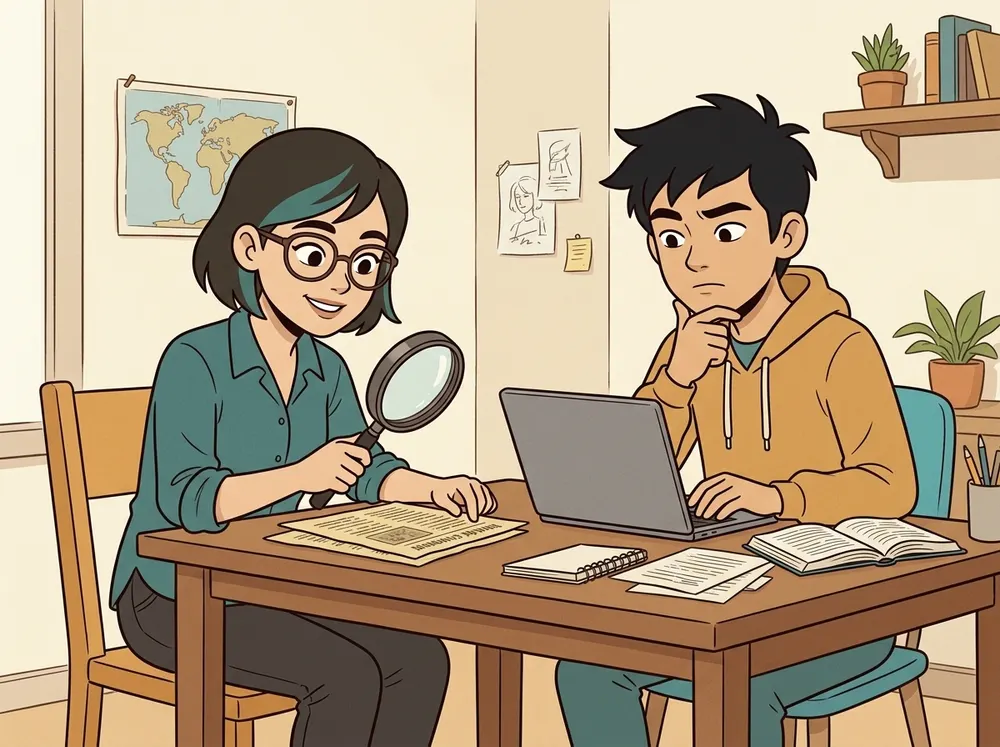
In any Secondary 1 class, students differ in prior knowledge, reading fluency, attention, and confidence. These differences are not fixed traits; they shift with the task, the context and the day. Research describes this as , and it is a feature of every classroom, not only of students with identified needs.
The transition into secondary school amplifies it. Students meet several new subjects at once, and History asks them not only to recall content but to reason with evidence, evaluate sources and construct arguments in writing. When materials are designed for an imagined “average” student, the cognitive demands of the format can obscure the thinking the subject is trying to develop.
We design for the range from the outset. Supports that are essential for some learners, such as explicit structure, segmented content and accessible formats, reduce unnecessary load for every learner.
How we design
Three principles in every lesson
Multiple means of representation
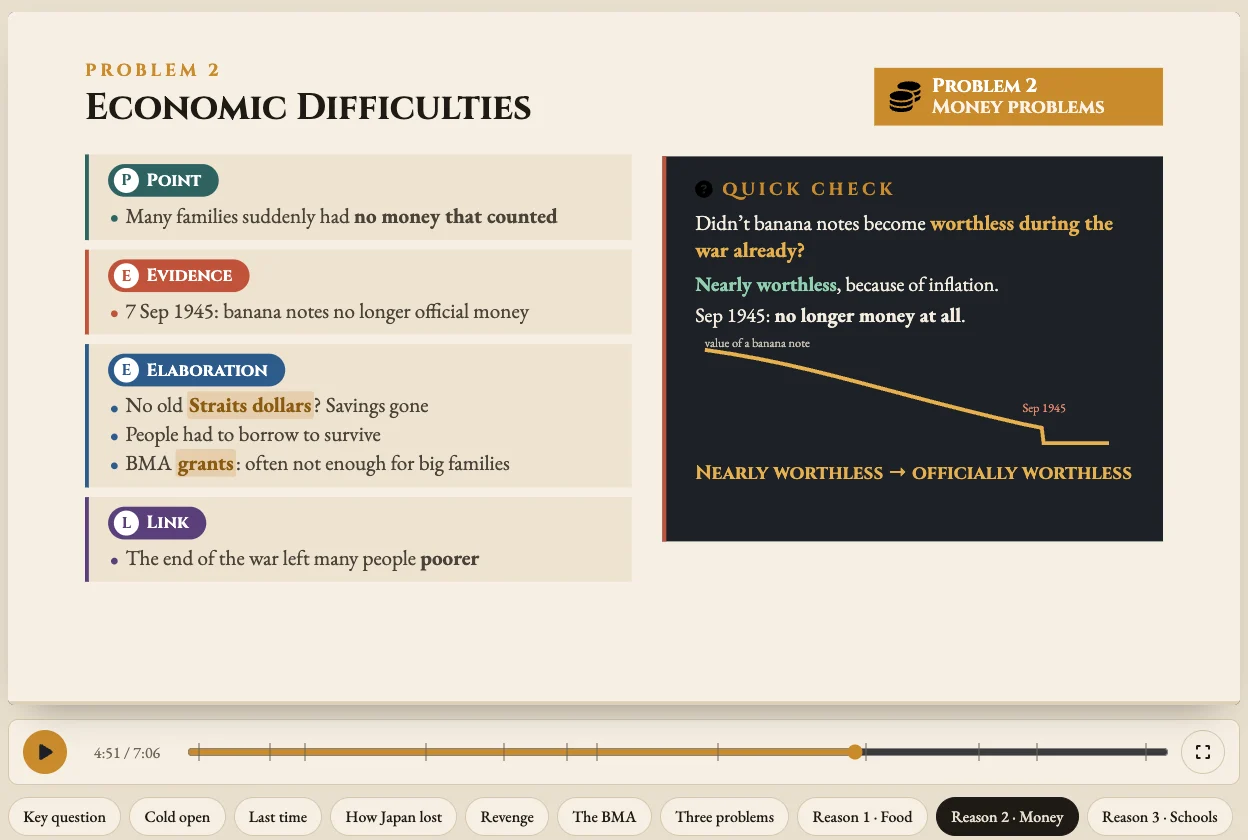
Video with captions, readable text, read-aloud, images and maps provide several routes into the same ideas. Rather than sorting students by “learning style”, a notion the evidence does not support, we give every student more than one way in.Disciplinary thinking made explicit
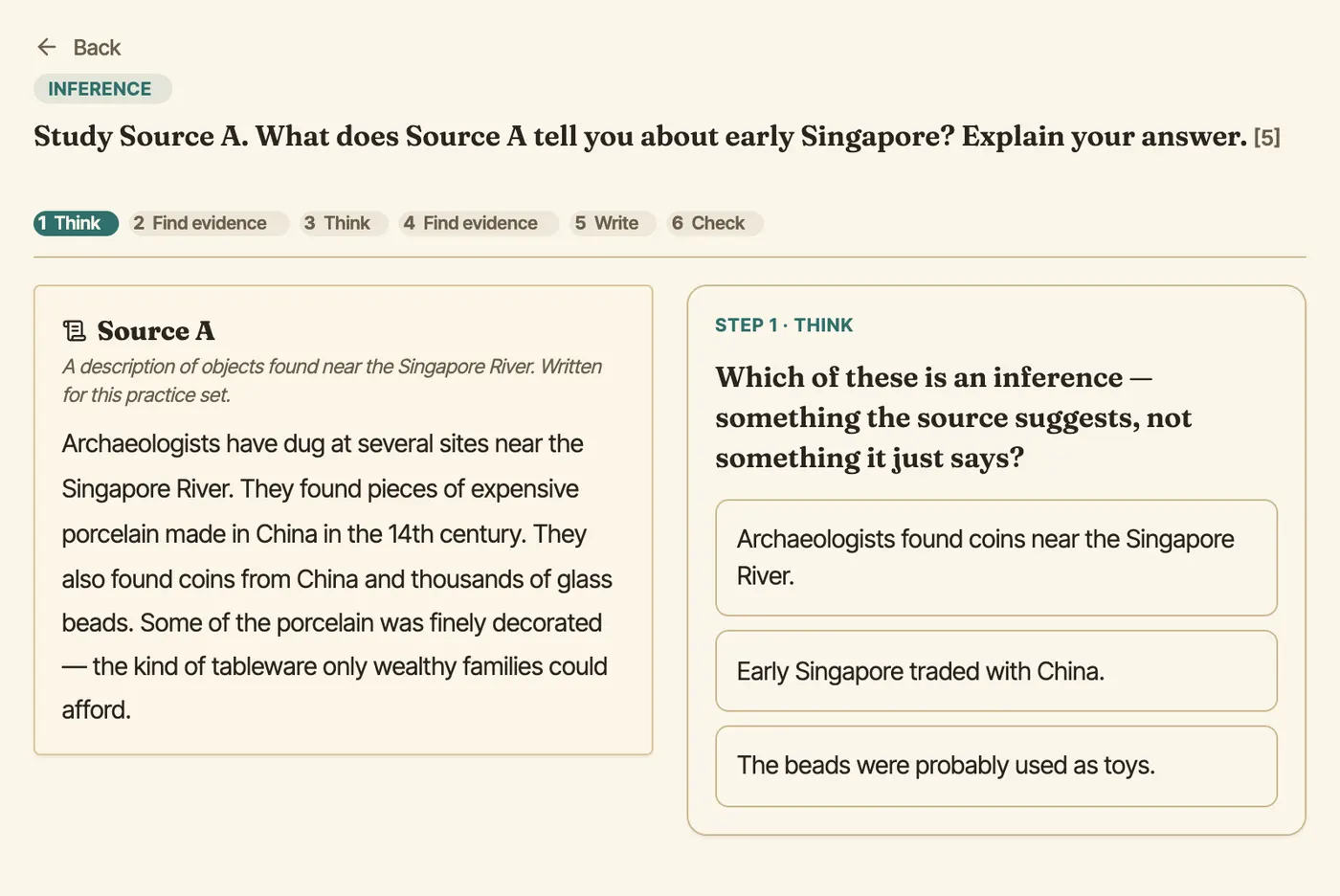
Historical skills such as inference, comparison and argument are decomposed into named steps and modelled clearly. such as the framework support early attempts and are gradually withdrawn as students become independent.Feedback that moves learning forward
Following the principles of , every written answer receives an indicative level and one specific next step, so feedback tells students not only how they did, but what to do next.
Our Study Tribe for schools
How it fits into your classroom
Built to sit alongside your teaching, not replace it. Use it across a unit:
- Lesson starters and flipped learning. Short videos, one syllabus idea each, with quick checks that make students answer first. Class time goes to discussion and source work.
- Source-based questions. Each question is broken into named skills, such as inference and comparison, and tagged with the historical concept it practises.
- Structured essays. PEEL scaffolds support early attempts and are withdrawn once answers are consistently strong. One task serves the whole range.
- Feedback between lessons. Success criteria before writing; a level, one strength and one next step after. Formative, and alongside your judgement.
- Revision and common tests. Spaced daily review, mixed chapter quizzes and practice papers in the assessed format, timed or untimed.
- Catching up after an absence. Students watch or listen to the missed topic, then practise it on their own.
- Access for every learner. Captions, audio, a glossary and an immersive reader, so every student reaches the same content without being singled out.
Research foundations
The evidence behind our design
Our design decisions are informed by established research in learning science, assessment and history education, including Universal Design for Learning, cognitive load theory, scaffolding, assessment for learning and historical thinking.
School pilots
A pilot as a research partnership
We are inviting a small number of teachers and schools to pilot Our Study Tribe with a class or group. Each pilot is structured to answer practical questions: how students use the tool, where it supports learning, and where the design needs to change.
Research tells us what tends to work; pilots test whether it works here, in Singapore classrooms.
Agree the focus
We discuss your class, your learning goals and how you intend to use the tool, whether in lessons, for homework or for revision, and agree what we will look at together.Access for your group
Your students receive pilot access to the Lower Secondary History content for an agreed period, at no cost.Use it alongside your teaching
Students work through lessons and practice in class or at home, individually or in study tribes, while usage is captured in aggregate.Review together
A structured check-in gathers feedback from you and your students, and it directly shapes what we build next.
Questions teachers ask
Before you start
Get in touch
Talk to us about a pilot
Tell us a little about your school, your class and what you would hope to learn from a pilot. We will get back to you within two working days.